
Concrete Price Per Cubic Yard: Delivery & Slab Cost Guide

Quick Answer:
Ready-mix concrete costs average $125 to $175 per cubic yard. When adding flat delivery fees ($100–$200) and labor costs, the total cost to pour a concrete slab averages $6 to $12 per square foot.
Whether you're installing a new driveway, building a house foundation, or pouring a concrete patio slab, budgeting requires understanding bulk pricing. Concrete is a commodity that is heavily influenced by regional material availability, shipping distances, and labor costs. If you buy too little, suppliers will charge you expensive small-load fees; if you buy too much, you pay for raw waste. This guide breaks down the current costs of ready-mix delivery, slab installations, and the financial threshold where bulk delivery makes sense.
The Average Cost of Concrete Per Cubic Yard
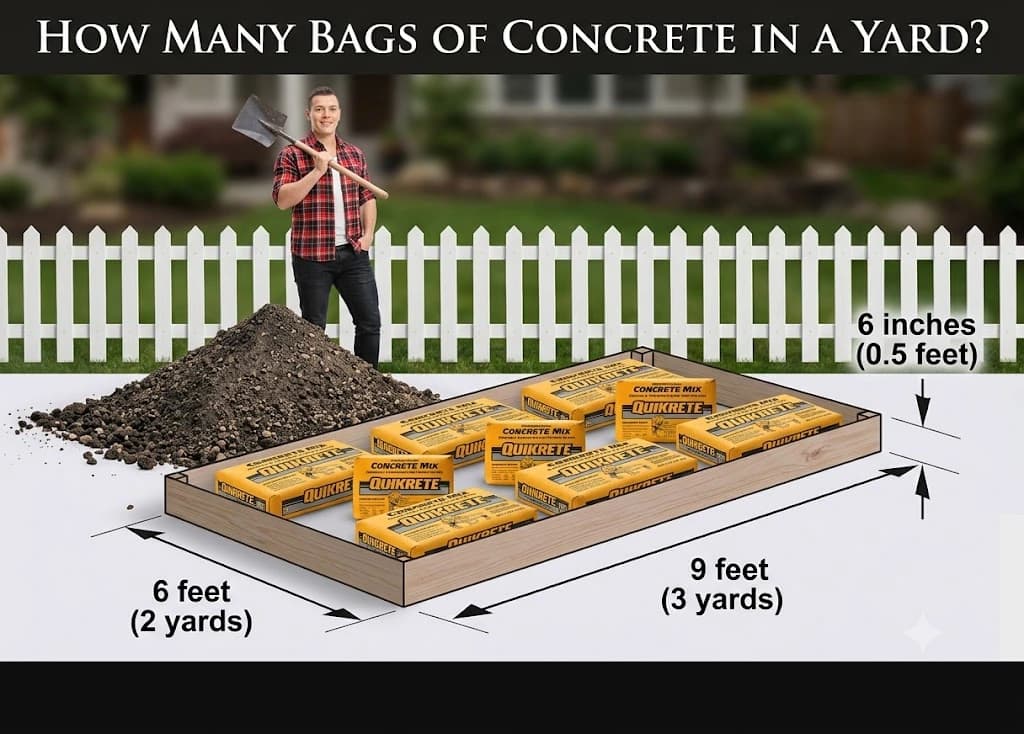
In the construction industry, bulk wet concrete is sold by the cubic yard (which occupies a 3ft × 3ft × 3ft space and weighs approximately 4,000 lbs). The national average cost for standard residential concrete mixtures (typically rated at 3,000 to 4,000 PSI strength) ranges from $125 to $175 per cubic yard. Pricing varies depending on specific additives, such as fiber mesh reinforcement (adds $5–$10 per yard) or winter accelerants (which prevent freezing during cold weather pours).
Ready-Mix Delivery Fees and Small Load Surcharges
Just like bulk topsoil, shipping is a major expense. Concrete transit mixers are heavy, expensive vehicles to run, and the concrete must be delivered and poured before it begins to set inside the drum. Because of this, ready-mix companies charge several fees:
- Flat Delivery Fee: Most suppliers charge a flat delivery fee of $100 to $200 per load within a 15-mile radius.
- Small Load Fee: Standard mixer trucks can hold up to 10 cubic yards of concrete. If you order less than their minimum threshold (usually 5 to 7 cubic yards), they will apply a "short load" surcharge of $50 to $150 to offset the cost of running an empty truck.
- Standby Time Fees: Trucks are allotted a set discharge window (usually 5 to 7 minutes per cubic yard). If your crew takes too long to wheelbarrow or spread the concrete, the driver will charge a standby fee of $2.00 to $3.00 per extra minute.
Estimated Cost to Pour a Concrete Slab
When hiring a contractor to pour a concrete slab, the cost of the material is only a fraction of the budget. A professional installation includes grading, setting up wooden forms, laying gravel base, adding rebar or wire mesh reinforcement, pouring the concrete, and applying a smooth troweled or brushed finish. The total cost ranges from $6 to $12 per square foot depending on thickness (4-inch vs 6-inch) and structural requirements.
Bulk Ready-Mix vs. Pre-Mix Bags: The Financial Threshold
Should you mix concrete yourself or call a truck? Let's run a comparative mathematical calculation:
Case Scenario: Requiring 2 Cubic Yards of Concrete
Option A: Buying 80lb Bags (90 Bags)
Material Cost: 90 Bags × $6.50 = $585.00 | Delivery: $0 (Self-Haul)
Total Cost: $585.00 | Labor: Lifting & mixing 7,200 lbs of dry concrete!
Option B: Ordering Ready-Mix Delivery
Material Cost: 2 Yards × $140 = $280.00 | Short Load Surcharge: $120 | Flat Delivery: $150
Total Cost: $550.00 | Labor: Spreading pre-mixed wet concrete directly from the chute!
As you can see, once your project requires more than **1.5 to 2 cubic yards**, ready-mix delivery is actually cheaper than buying bags, and it spares you from the exhausting labor of mixing tons of material by hand.
Money-Saving Concrete Tips from Reddit Professionals
In construction manager and engineering forums, professionals share strategies to minimize delivery overheads and avoid property damage.
As user pm_concrete shares: "Always build your forms strong. A cubic yard of wet concrete weighs 2 tons and exerts massive outward pressure. If you build cheap forms using thin wood and don't brace them with stakes every 3 feet, they will blow out during the pour, wasting hundreds of dollars of concrete."
For engineering estimates, user concrete_designer writes: "Make sure you calculate your subgrade preparation accurately. If your gravel base is uneven and averages 4.5 inches deep instead of your targeted 4 inches, you will run out of concrete before you reach the end of the slab. Ready-mix trucks won't wait around for free while you go buy bags to patch the gap."
Sources and Community References
- Reddit ConstructionManagers ACI concrete mix calculator discussion: ConstructionManagers - ACI Concrete Mix Calculator
- Reddit civilengineering discussion on concrete mix calculators: civilengineering - ACI Mix Calculation Thread
- Reddit CivilEngineerIndia tool resources: CivilEngineerIndia - Concrete Tools for Engineers
Atlas Keller's editorial scope covers Infinix material-volume, coverage, and construction planning content. Quantities and costs are estimates, not engineering specifications or supplier quotes.