
How Long is the LSAT? Exam Timing, Structure, and Pacing Strategy

Quick Answer:
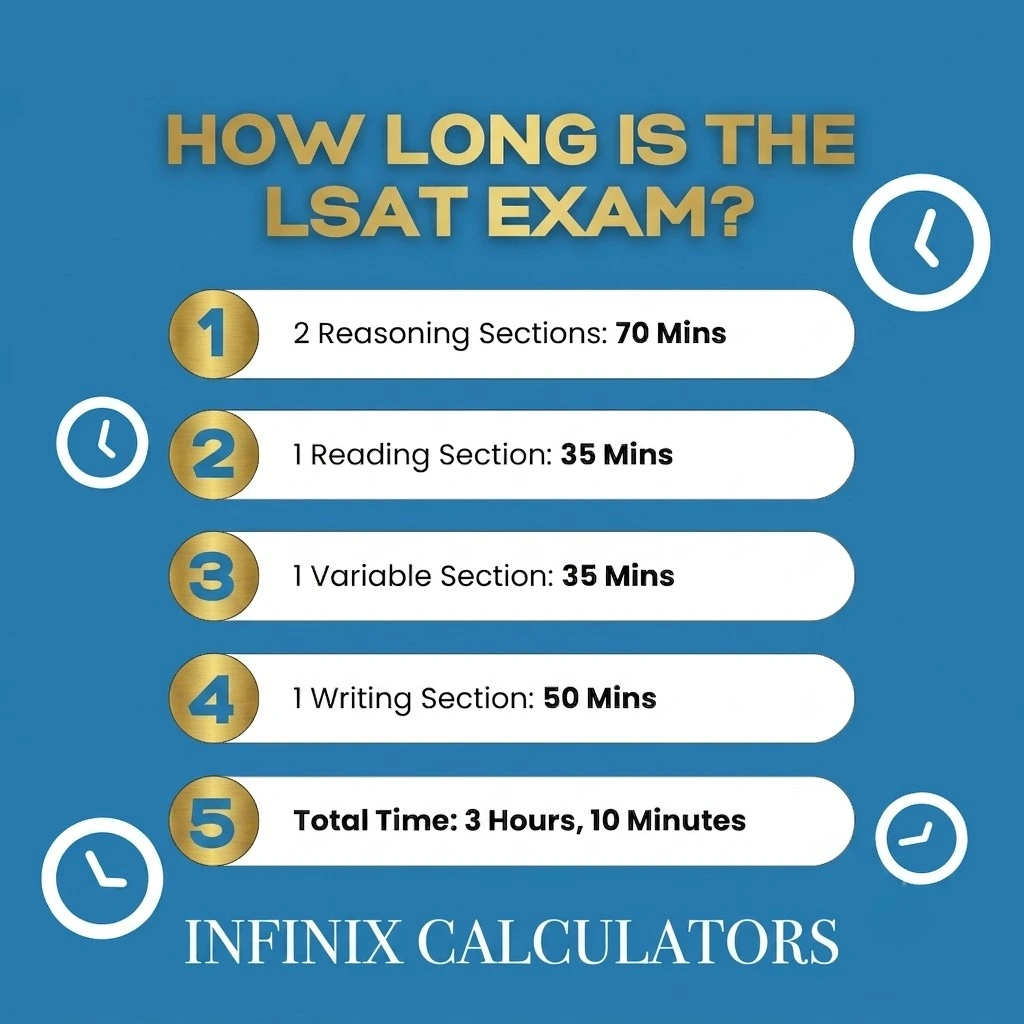
The active testing time for the modern LSAT is exactly 2 hours and 20 minutes (four 35-minute sections). However, when accounting for check-ins, remote proctoring setup, and a mandatory 10-minute break, plan to spend 3 to 3.5 hours total on test day.
When preparing for law school admissions, knowledge of the test content is only part of the equation. You also need to build the physical and mental stamina required to endure the testing day. So, how long is the LSAT? Read our LSAT exam duration & timing guide.
Under the modern computer-based format, the LSAT has specific timing guidelines, intermission lengths, and question counts that every candidate should know before sitting for the exam. This guide breaks down the timing schedule in detail.
How Long is the LSAT Exam?
The actual active testing time on the LSAT is exactly 2 hours and 20 minutes (140 minutes). However, you will not be out of the testing center (or away from your remote proctor) in that time.
With remote proctor check-in, system checks, instructions, and a mandatory 10-minute break between sections 2 and 3, you should plan to spend approximately 3 hours to 3.5 hours on test day. This is consistent with the official guidelines on the LSAC Test Day Portal. If you qualify for testing accommodations (like double time), your total time will be longer.
Section-by-Section Timing Breakdown
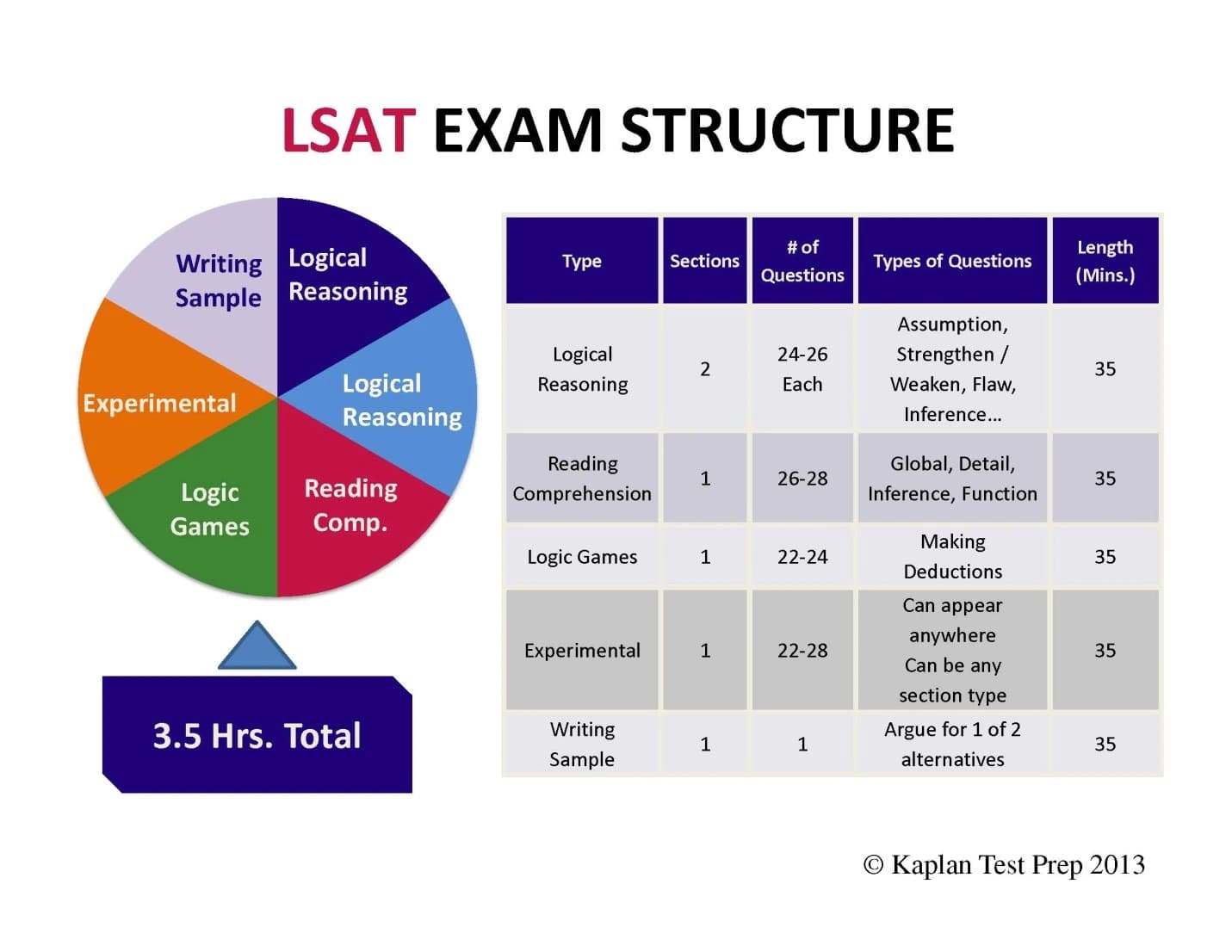
The LSAT consists of four multiple-choice sections, each lasting exactly 35 minutes. Here is the typical timeline:
| Test Element | Duration | Details |
|---|---|---|
| Section 1 | 35 Minutes | Logical Reasoning or Reading Comprehension |
| Section 2 | 35 Minutes | Logical Reasoning or Reading Comprehension |
| Intermission | 10 Minutes | Mandatory scheduled break (stretch, drink water) |
| Section 3 | 35 Minutes | Logical Reasoning or Reading Comprehension |
| Section 4 | 35 Minutes | Logical Reasoning or Reading Comprehension |
Estimate Your Scaled Performance
After taking a timed practice test, see how your raw correct counts convert to the official scaled score using our LSAT Score Calculator.
Convert Raw ScoreHow Many Questions on the LSAT?
Another common concern for candidates is: how many questions are on the LSAT?
Each 35-minute section of the LSAT contains between 24 and 28 questions, with 25 or 26 being the most common. In total, you will encounter 100 to 104 questions on the exam. However, only 3 of the 4 sections are scored. The fourth section is an unscored experimental section used by LSAC to test new questions for future exams. You will not know which section is the experimental one while taking the test, so you must treat all sections with equal importance.
Candidates requiring extra time or screen readers must submit an accommodations request. As discussed on the LSAT board by user accommodated_tester: "The accommodations approval process has become much more streamlined, but you must submit your documentation through the LSAC portal well before the registration deadline to ensure it is processed in time."
Therefore, your final scaled score is based on a raw total of 75 to 76 scored questions.
Pacing and Endurance Strategies for Test Day
With only 35 minutes per section, pacing is critical. You have an average of 1 minute and 24 seconds per question. To maximize your raw score conversion, employ these strategies:
- Don't Get Stuck: The LSAT contains questions of varying difficulty. A difficult question is worth the exact same point as an easy question. If a question takes more than 2 minutes, guess, flag it, and move on.
- Use the Intermission Wisely: During the 10-minute break, stand up, stretch, and clear your mind. Do not spend the break reviewing your performance on the first two sections. Focus entirely on the sections ahead.
- Simulate Test Conditions: When taking practice tests, always take them under timed conditions with a strict 10-minute break. This builds the mental stamina required for the official test day.
Sources and Community References
- Official LSAC Guide for LSAT Test Day preparation: LSAC - What to Expect on Test Day
- Official LSAC Accommodations and Testing Policies: LSAC - Testing Accommodations
- Reddit LSAT discussion on timing pacing strategies and accommodated testing: LSAT - Accommodations and Timing Prep
Rowan Vance's editorial scope covers Infinix mathematics, unit conversions, ratings, and educational scoring guides. No university or testing-agency affiliation is claimed.