
LSAT Exam Breakdown (2026): Sections, Timing & Prep Guide

Quick Answer:
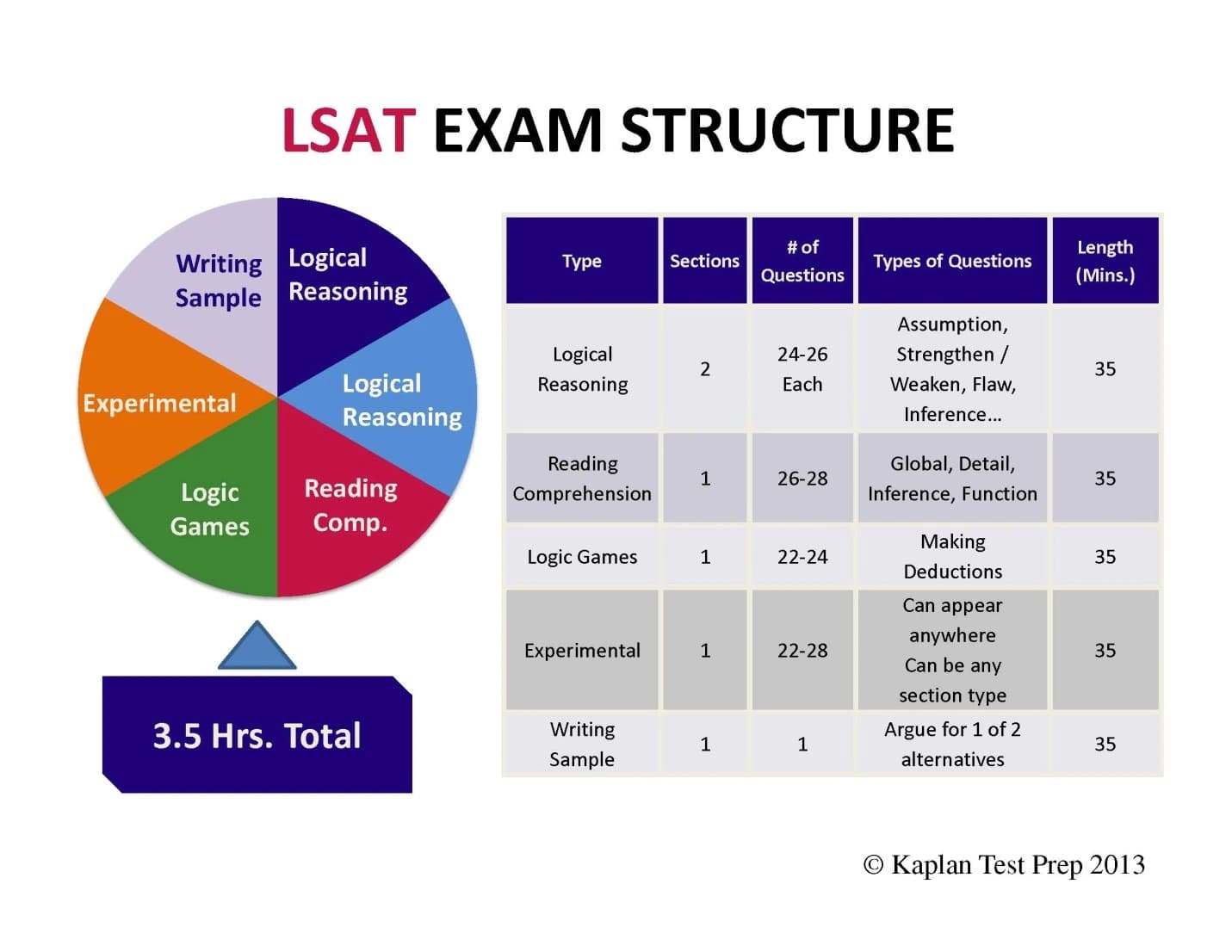
The 2026 LSAT consists of 4 total 35-minute sections (3 scored, 1 unscored experimental) with a mandatory 10-minute intermission between sections 2 and 3. Total active testing time is 2 hours and 20 minutes, but you should budget 3.5 hours on test day for check-in and remote proctoring setup.
Whether you are taking the Law School Admission Test (LSAT) remotely at home or at a Prometric testing center, mastering test timing and section structure is critical to achieving your target score.
Following major structural updates, the modern LSAT focuses heavily on Logical Reasoning and Reading Comprehension (Analytical Reasoning/Logic Games has been removed). Understanding how time is distributed across these sections will keep you calm and focused on test day.
Total Exam Duration and Break Structure
The standard testing schedule is strictly enforced by the Law School Admission Council (LSAC):
- Section 1 (35 minutes): Scored or Unscored Section
- Section 2 (35 minutes): Scored or Unscored Section
- Intermission (10 minutes): Mandatory break. You may leave your desk, stretch, use the restroom, and consume a light snack.
- Section 3 (35 minutes): Scored or Unscored Section
- Section 4 (35 minutes): Scored or Unscored Section
Section Breakdown: Scored vs. Unscored Experimental
The 4 sections on test day break down into two main content domains:
| Section Type | Number of Sections | Questions Per Section | Scored Status |
|---|---|---|---|
| Logical Reasoning (LR) | 2 Sections | 25 to 26 questions | Scored (~50 questions total) |
| Reading Comprehension (RC) | 1 Section | 26 to 28 questions (4 passages) | Scored (~27 questions total) |
| Experimental Section | 1 Section (LR or RC) | 24 to 28 questions | Unscored (Pretest data) |
Track Your LSAT Score Conversion
Want to see how your correct raw question counts translate to scaled scores (120–180)? Try our interactive LSAT Score Calculator.
Grade Practice TestPacing & Time Per Question Strategies
With 35 minutes to complete 25 to 26 questions, you have an average of 1 minute and 24 seconds per question. High-scoring candidates use the following time management rules:
- First 10 Questions in 10 Minutes: Questions 1–10 in Logical Reasoning are statistically easier. Aim to finish them in 10 to 12 minutes to bank extra time for difficult flaw and parallel reasoning questions at the end.
- Reading Comprehension 8-Minute Passage Rule: Budget approximately 8 minutes and 45 seconds per RC passage (reading the passage in 2.5 minutes, answering 6–7 questions in 6 minutes).
- Never Leave Blanks: There is no penalty for wrong answers on the LSAT. If time is running out, guess on remaining questions before the clock hits zero.
Test Day Essentials and Accommodation Guidelines
For remote test-takers, ensure your room meets LSAC requirements: a clean desk, quiet environment, strong Wi-Fi, and an approved webcam. Candidates requiring extended time (50% or 100% additional time) must request accommodations through the official LSAC Accommodations Portal well ahead of the registration deadline.
Official LSAC & Prep Community References
- Official LSAC Test Day requirements: LSAC - What to Expect on Test Day
- Official LSAC Accommodations and Guidelines: LSAC - Testing Accommodations
- Read companion guide: How Long is the LSAT? Timing & Pacing Strategy
Rowan Vance's editorial scope covers Infinix mathematics, unit conversions, ratings, and educational scoring guides. No university or testing-agency affiliation is claimed.