
Why Use Affirm Instead of a Credit Card? Rates & Fees

Quick Answer:
Use Affirm if you want a fixed payment schedule with non-compounding simple interest (or 0% APR promotional terms) and want to avoid compounding interest traps. Use a credit card if you pay off your balance in full every month to earn rewards points, or if you need robust purchase protection and instant fraud resolution.
When making a significant purchase—whether it's a new laptop, living room sofa, or travel booking—shoppers are increasingly faced with a checkout choice: Pay with a standard Credit Card or finance with Affirm Buy Now, Pay Later (BNPL)?
While both options allow you to defer paying the full price upfront, their underlying financial structures, interest calculations, and credit reporting behaviors differ drastically. Understanding these differences is essential to protecting your credit score and avoiding unexpected financing charges.
Affirm vs. Credit Cards: Key Differences
At its core, a credit card is a revolving line of credit, whereas Affirm provides a closed-end installment loan tied to a single transaction.
| Feature | Affirm BNPL | Standard Credit Card |
|---|---|---|
| Credit Structure | Fixed installment loan per purchase | Revolving open line of credit |
| Interest Type | Simple interest (never compounds) | Daily compounding interest |
| Late Fees | $0 (No late fees ever charged) | Up to $41 per late payment + penalty APR |
| Payment Term | Fixed (e.g., 4 biweekly or 3–24 months) | Flexible minimum payments (revolving) |
| Rewards Points | None (unless using Affirm Debit Card) | Cashback, airline miles, points (1%–5%) |
Interest Math: Simple Interest vs. Revolving Credit Card APR
The single biggest structural advantage of Affirm is its use of simple non-compounding interest. When you accept an Affirm loan (at 0%, 15%, 24%, or 30% simple interest), the exact dollar amount of interest you will pay is calculated upfront and fixed for the entire loan duration.
Conversely, credit cards calculate interest using a Daily Periodic Rate (DPR) applied to your average daily balance. If you do not pay off your credit card balance in full during the grace period, interest compounds daily. Carrying a $1,500 balance on a credit card at a 24% APR can cost far more over 12 months than a 24% simple interest Affirm loan because interest accrues on top of previous interest.
On Reddit's personal finance forums, shoppers frequently debate this dynamic. As user frugal_techie explains on Affirm: "I prefer Affirm for large $1,000+ purchases because it locks me into a hard end date with a fixed monthly dollar amount. With a credit card, it's too easy to make minimum payments and get stuck in a debt cycle."
Calculate Your Payment & Interest Instantly
Want to see the exact monthly cost and total simple interest before clicking buy? Use our interactive Affirm Payment Calculator.
Open Affirm CalculatorPros and Cons of Buying Now and Paying Later
Pros of Affirm:
- 0% APR Promotional Financing: Many merchant partners (e.g., Peloton, Dyson, Amazon) offer true 0% APR installment plans.
- No Late Fees or Compound Interest: You will never be hit with unexpected late fees or deferred interest penalties.
- Predictable Budgeting: Fixed monthly payments prevent minimum payment surprises.
Cons of Affirm:
- Dispute & Return Frustrations: If you return an item, merchant refunds can take weeks to process, during which loan payments remain due.
- High Interest Tiers for Higher Risks: Non-promotional Affirm APRs can reach up to 36% simple interest depending on your credit profile.
- No Traditional Rewards: You forfeit cashback and credit card travel points.
Credit Score Impact: Soft Pulls, Hard Pulls, and Reporting
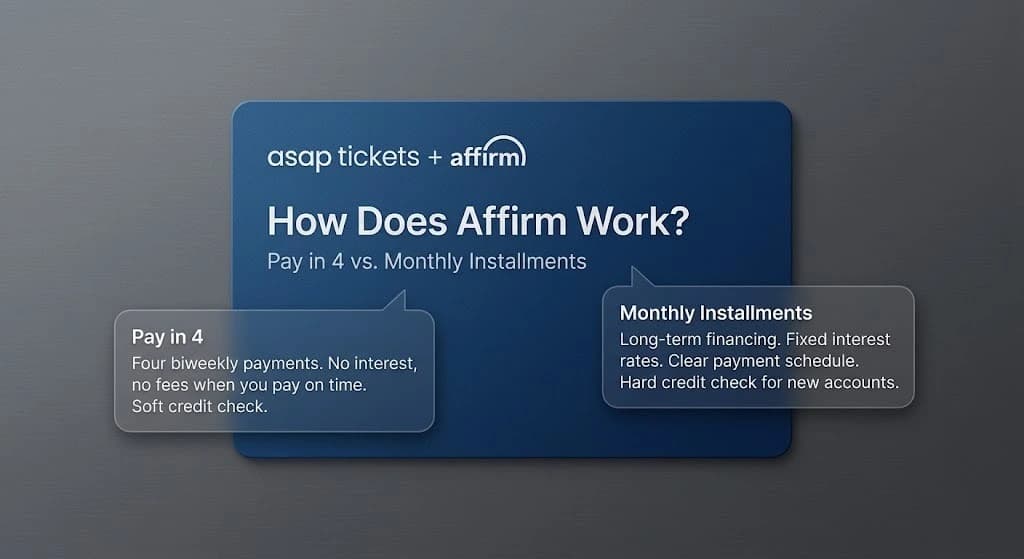
When you check your eligibility with Affirm at checkout, Affirm performs a soft credit inquiry, which has zero impact on your credit score. However, once you complete the purchase, certain loan types (such as long-term monthly installments) are reported to major credit bureaus like Experian.
Opening multiple individual installment loans in a short timeframe can reduce your average age of accounts (AAoA) and trigger temporary dips in your credit score. If you pay on time, Affirm can help build credit history; however, severe delinquencies (30+ days late) are reported to credit bureaus.
When to Use Affirm vs. When to Use a Credit Card
- Choose Affirm when: You qualify for 0% APR financing, want a strict fixed payoff timeline, or want to prevent compounding credit card debt.
- Choose a Credit Card when: You pay off balances in full monthly, want credit card rewards/points, or need immediate purchase/extended warranty protection.
Sources and Community Discussion
- Reddit Affirm discussion on credit cards vs Affirm installments: Affirm - Why Use Affirm Over Credit Cards
- Reddit personalfinance community comparison of BNPL financing: personalfinance - Affirm Shopping Installments
Vaughn Mercer's editorial scope covers Infinix finance, tax, payroll, and payment-fee content. Estimates are educational and do not constitute financial or tax advice.