Are Square Processing Fees Worth It? Honest Cost Analysis for Small Businesses
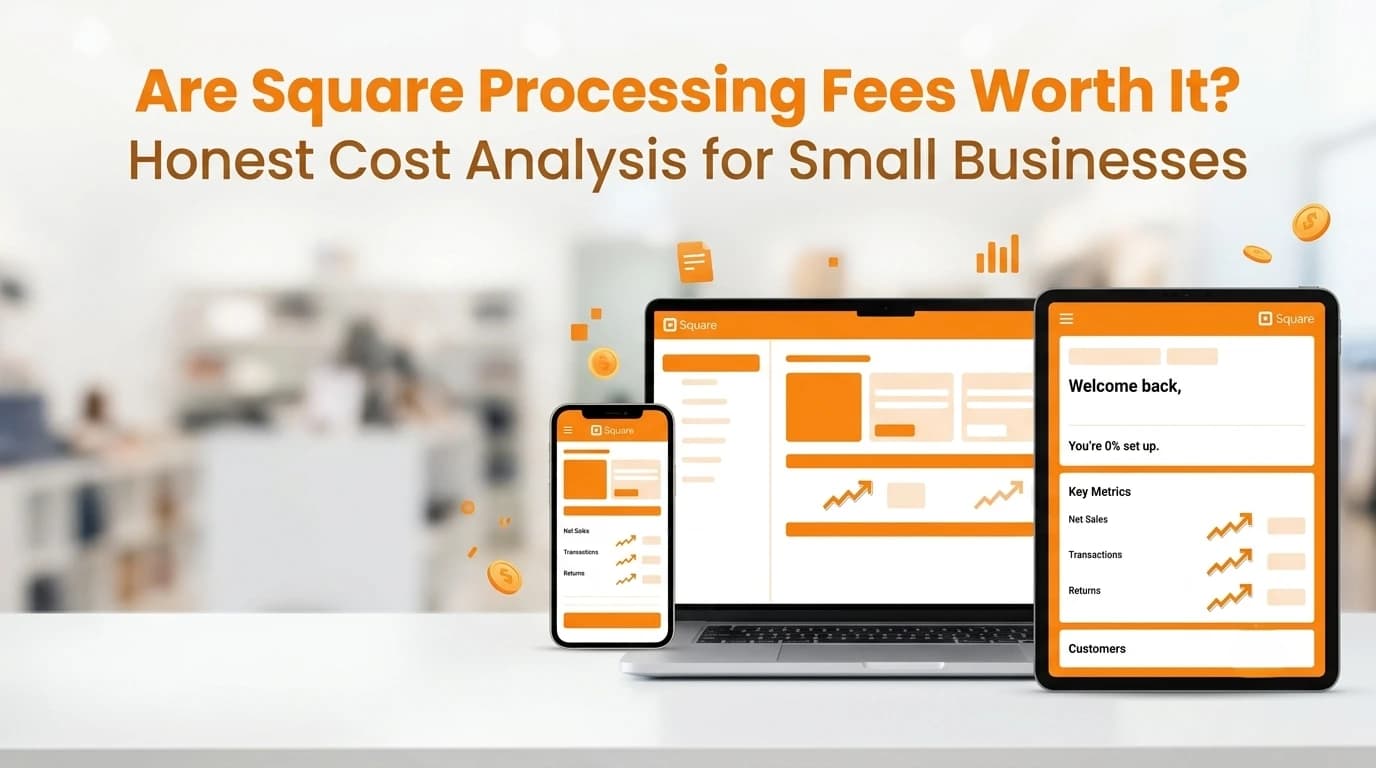
Small business owners frequently ask: "Are Square's processing fees worth it, or am I leaving thousands of dollars on the table?" As point-of-sale technology advances, merchants must balance payment processor convenience against raw transaction costs.
Overview: The True Cost of Accepting Card Payments
Square revolutionized small business credit card processing by eliminating traditional merchant account hurdles: monthly statement fees, PCI compliance assessments, gateway fees, and long-term contracts. However, Square's flat-rate pricing model means that high-margin debit cards and low-cost credit cards cost you the exact same percentage as rewards cards.
Square Processing Rates & Fee Model Breakdown
Square charges predictable per-transaction fees based on how the customer pays:
- In-Person (Chip, Contactless Tap, Apple Pay, Swipe): 2.6% + $0.10 per transaction.
- Online Store & E-Commerce Payments: 2.9% + $0.30 per transaction.
- Square Invoices: 3.3% + $0.30 per transaction (3.5% + $0.15 if paid via card on file).
- Manually Keyed-In & Virtual Terminal: 3.5% + $0.15 per transaction.
The $10,000 Break-Even Point: Flat Rate vs. Interchange-Plus
On small business forums (such as Reddit's r/Entrepreneur and r/smallbusiness), experienced merchants highlight a clear processing volume threshold:
- Under $10,000 / month in card sales: Square is almost always cheaper overall because traditional merchant processors charge $15–$30/month account maintenance fees, annual PCI compliance fees, and terminal lease fees.
- Over $15,000–$20,000 / month in card sales: Switching to an Interchange-Plus processor (where wholesale Visa/Mastercard rates average 1.5% to 1.8% + $0.10) can save $200 to $600+ per month in processing overhead.
Pros & Cons of Square for Small Business Owners
Advantages
- Zero monthly subscription or hidden fees
- Free mobile card reader & intuitive POS software
- Next-business-day standard deposits
- Built-in chargeback protection up to $250/month
Disadvantages
- Higher effective fee rate for debit card payments
- Risk of account holds or freezes on unexpected large tickets
- Original processing fees are non-refundable upon customer refund
Square vs. Stripe, Toast, Clover, and PayPal
How does Square stack up against major competitors in 2026?
- Stripe: Matches Square's 2.9% + $0.30 online rate, but offers superior developer API flexibility for custom web platforms.
- Toast: Tailored specifically for full-service restaurants with specialized kitchen display hardware, though software subscriptions can add monthly cost.
- Clover: Operates on merchant account structures with customized hardware options, making it strong for high-volume retail.
Final Verdict: When Is Square Worth It?
Square is 100% worth it for boutique retail stores, mobile service providers, pop-up vendors, and growing businesses processing under $10,000 monthly. To check your exact fee burden and net payouts, use our free Square Fee Calculator.
References & Discussions: Reddit r/Entrepreneur thread "Are the fees for Square worth it?" and small business processing cost studies.